

It Looks Clean… So Why Does It Still Smell?
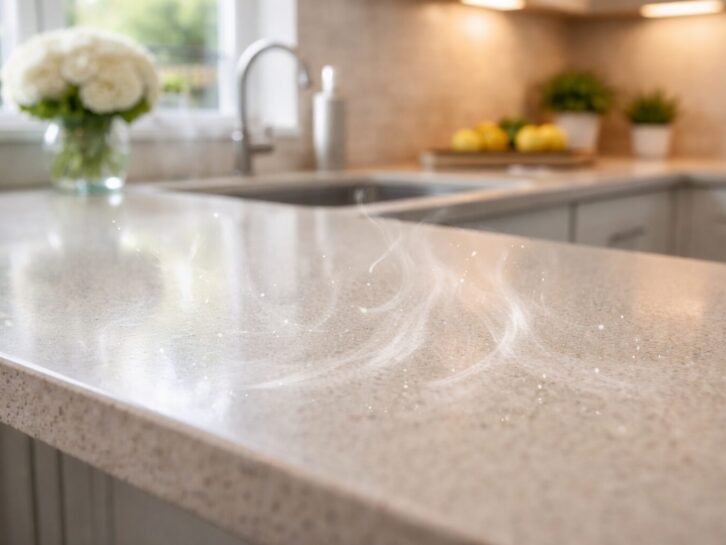
You walk into a room—kitchen, bathroom, bedroom, even your vehicle—and everything looks spotless.
But something’s off.
There’s still a smell.
Not strong. Not overwhelming. But definitely there.
That’s what we call a mild surface odor—and it’s one of the most misunderstood odor problems in Maine homes.
Because here’s the truth:
Clean-looking does not mean clean.
What “Cleaning” Actually Means (And Where Most People Get It Wrong)
Let’s strip it down to basics.
Cleaning is supposed to be:
The removal of soil from a surface.
But not all “soil” is the same.
Two Types of Surface Contamination:
1. Inorganic Soil
- Dust
- Dirt
- Sand
Annoying? Yes.
Odor-causing? Not really.
Also Read 📖Odor Removal Maine: Why Your New Home Still Smells After Cleaning
2. Organic Soil (This is the real problem)
- Food residue
- Body oils
- Pet accidents
- Biological material
This is where things change.
Because organic material does something inorganic doesn’t…
👉 It feeds bacteria.
The Hidden Cause of Mild Odors: Microbial Activity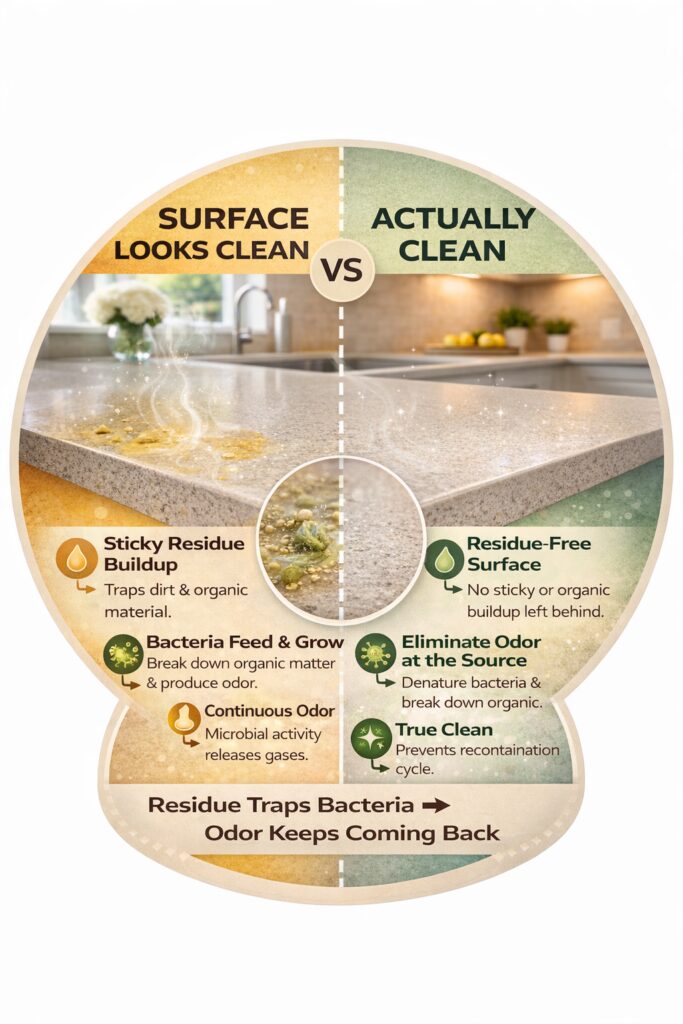
Even on hard surfaces—countertops, sinks, trim, door handles—microscopic organic residue can remain after cleaning.
And bacteria don’t need much to thrive.
They:
- Feed on leftover organic material
- Multiply rapidly
- Produce metabolic byproducts
One of those byproducts?
Odor.
This means your “clean” surface could actually be:
- Supporting microbial growth
- Producing odor continuously
- Affecting your indoor air quality
Why Hard Surfaces Are Not Immune
Most people assume odor only lives in soft materials like carpet or fabric.
That’s a mistake.
Bacteria don’t care if a surface is hard or soft—they only care if there’s food available.
Even smooth surfaces can:
- Hold microscopic residue
- Trap oils and organic film
- Support bacterial colonies
And because you can’t see it…
You assume it’s clean.
Also Read 📖Why Do Cooking Smells Linger and When Is Odor Removal Needed?
The Real Problem: Cleaning Residue
Here’s where things get interesting—and where most cleaning routines actually make things worse.
Many cleaning products:
- Use surfactants (sticky compounds)
- Attract dirt and water
- Leave behind a thin residue layer
Over time, this builds up.
And that residue:
- Traps new soil from the air
- Holds organic material
- Creates a perfect environment for bacteria
You’re not just cleaning—you’re layering contamination.
That’s why surfaces become:
- Harder to clean
- More prone to odor
- Less hygienic over time
A Common Maine Scenario
A homeowner regularly cleans their kitchen counters with store-bought cleaners.
Everything smells fresh—at first.
But within hours or days:
- A faint odor returns
- The surface feels slightly sticky
- Dirt seems to “come back faster”
What’s happening?
- Residue buildup is trapping new contaminants
- Bacteria are feeding on leftover organic material
- Odor is being continuously recreated
This is incredibly common in Maine homes, especially in:
- Kitchens
- Bathrooms
- High-touch surfaces
- Seasonal homes with fluctuating humidity
The Right Way to Eliminate Mild Surface Odors
To solve the problem, you need to do two things:
1. Remove the Soil Completely
2. Leave No Residue Behind
That’s it.
But doing that properly requires the right method.
Why Microfiber Changes Everything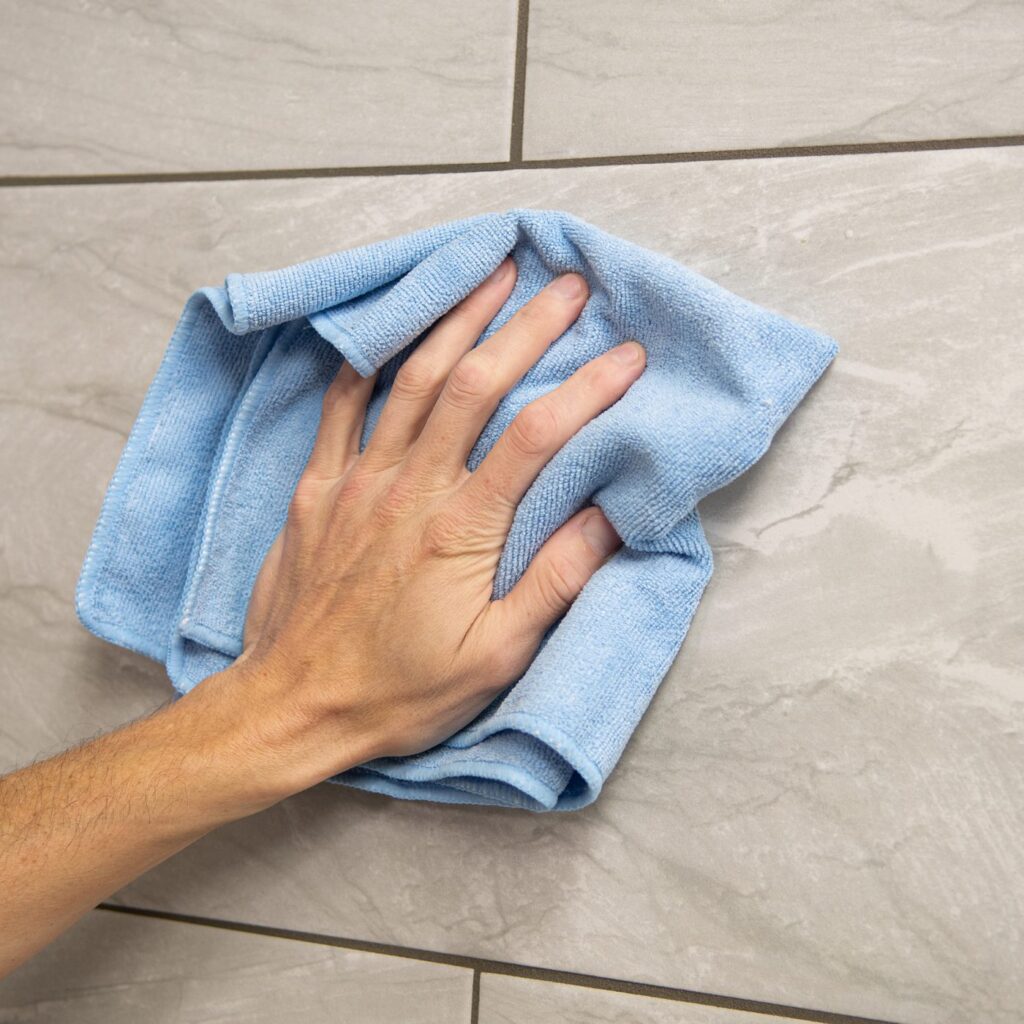
At Maine OdorPros, we use microfiber for a reason.
Microfiber:
- Contains millions of microscopic fibers
- Physically lifts and traps particles
- Removes contaminants without relying on chemicals
Instead of pushing dirt around…
It actually removes it.
The Difference: Cleaning vs True Odor Elimination
Here’s where we separate from typical cleaning methods.
Our Process:
- Use microfiber to physically remove contaminants
- Apply a controlled aqueous solution to break down organic material
- Eliminate odor at the molecular level
- Leave surfaces completely residue-free
No buildup. No masking. No recontamination cycle.
Why This Matters for Indoor Air Quality
Mild surface odors are often dismissed—but they shouldn’t be.
Because they indicate:
- Active microbial presence
- Ongoing contamination
- Compromised indoor air quality
And today, more than ever:
- People are more sensitive to indoor environments
- Homes are more tightly sealed
- Air circulation is more limited
What’s on your surfaces eventually ends up in your air.
When Mild Odor Becomes a Bigger Problem
If left untreated, mild surface odors can escalate into:
- Persistent indoor odor issues
- Cross-contamination to other surfaces
- Increased bacterial growth
- More difficult and costly remediation
Catching it early is key.
When to Call Maine OdorPros
If you’re noticing:
- Odors returning quickly after cleaning
- Sticky or film-like residue on surfaces
- Persistent mild smells you can’t eliminate
- “Clean” spaces that don’t feel fresh
It’s time to go beyond basic cleaning.
If you can smell it, it’s a problem—fix it at the source.
Why Maine OdorPros Is Different
We don’t treat odor as a surface issue.
We treat it as a source problem.
Our approach:
- Identifies the root cause
- Removes contamination—not just appearance
- Uses residue-free, professional-grade solutions
- Restores true cleanliness and indoor air quality