

Why Your Floors Still Smell—Even After Cleaning
You cleaned it. You scrubbed it. Maybe even hit it with baking soda or a store-bought spray.
And yet… the smell is still there.
Here’s the truth most homeowners don’t realize:
If you can still smell it, the problem isn’t on the surface—it’s underneath.
Luxury Vinyl Plank (LVP) flooring is marketed as water-resistant—but not odor-proof. In Maine homes, where humidity, seasonal moisture, and temperature swings are common, odors don’t just sit on top of flooring…
They work their way underneath it.
How Odors Actually Penetrate Vinyl Plank Flooring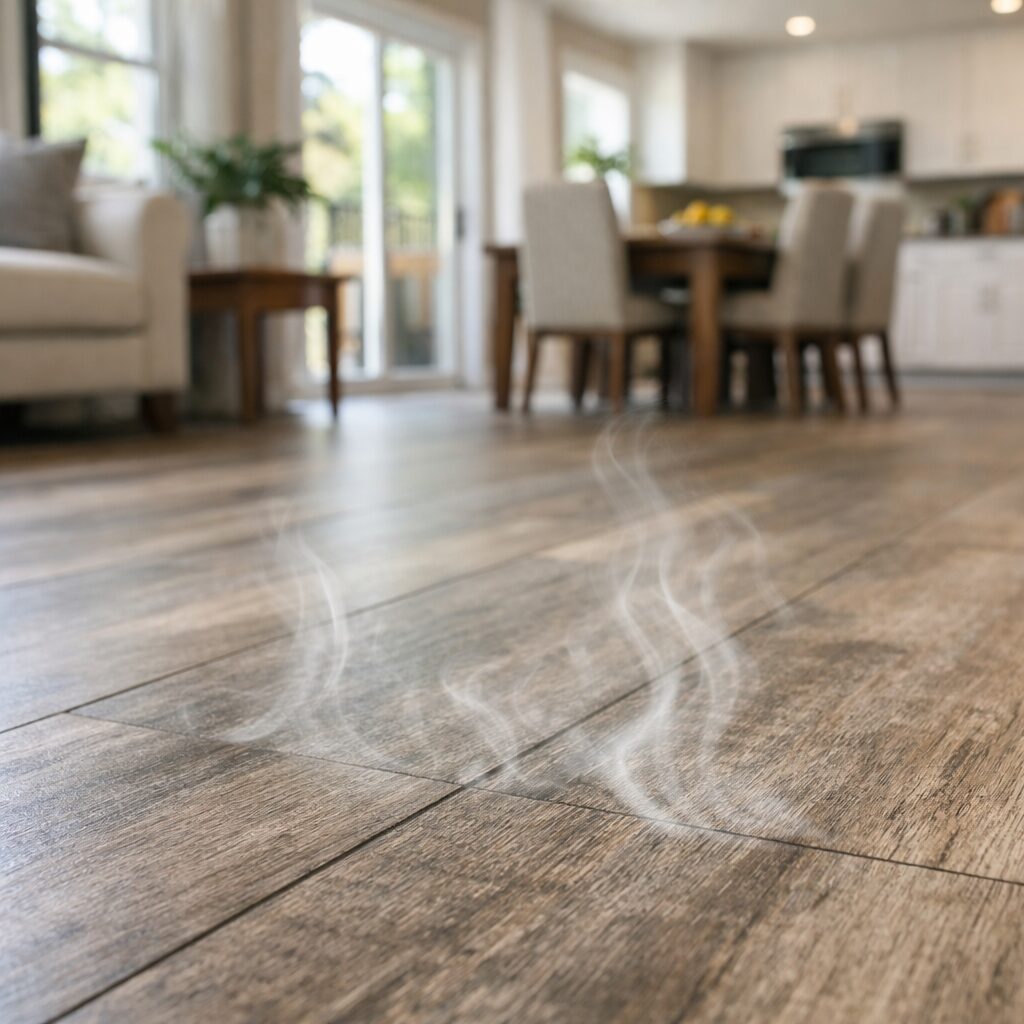
Vinyl itself is non-porous. That’s the good news.
The bad news?
The system around it is not.
What really happens:
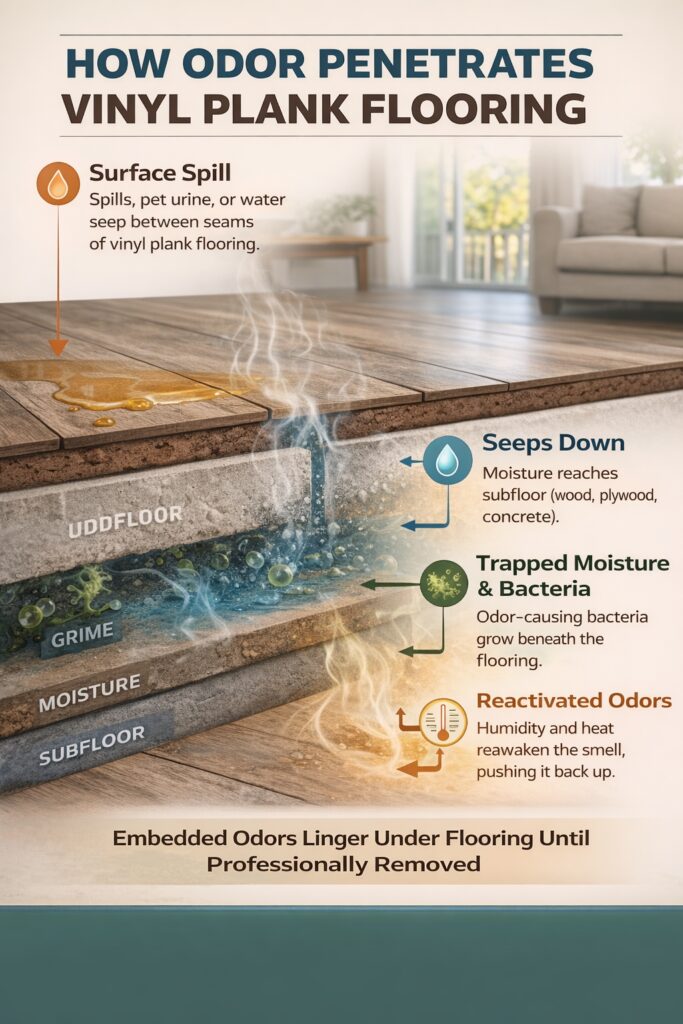
- Liquids (pet urine, spills, moisture) seep through seams and edges
- Odor-causing bacteria follow the moisture path
- The subfloor (wood, plywood, concrete) absorbs contamination
- Odors begin to live below the surface, not on it
Over time, heat and humidity reactivate those odors, pushing them back into your living space.
This is why the smell seems to “come and go”—but never truly leaves.
The Real Problem: The Subfloor
Your subfloor is the hidden layer beneath your flooring—and it’s where most odor problems actually exist.
Once contamination reaches this level:
- Surface cleaning becomes ineffective
- Odors become embedded in porous materials
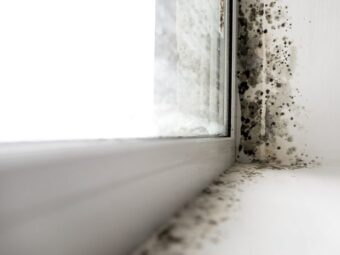
- Mold and bacterial growth can begin
- Indoor air quality starts to decline
This is where DIY solutions fail—and where professional odor removal begins.
What Causes Musty or Persistent Floor Odors?
In Maine homes, these are the most common culprits:
- Pet accidents that weren’t fully removed
- Spills that seeped between planks
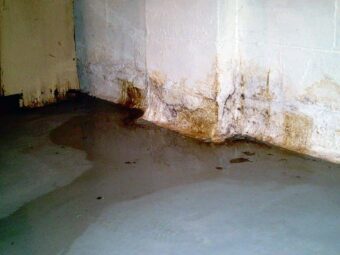
- Moisture intrusion from leaks or humidity
- Poor ventilation, especially in basements or closed spaces
- Water damage beneath flooring
And here’s the key insight:
Musty odor isn’t just a smell—it’s a signal of microbial activity.
That means something is actively growing, feeding, or breaking down organic material beneath your floor.
Also Read 📖Odor Removal Maine: Why Your New Home Still Smells After Cleaning
Signs Your Flooring Is Trapping Odor
If you notice any of these, you’re likely dealing with a subfloor issue:
- Odor returns quickly after cleaning
- Smell worsens during humid or rainy weather
- Persistent musty or sour smell
- Warping or discoloration in flooring
- Increased humidity or damp feeling in the room
These aren’t cosmetic issues—they’re source-level contamination problems.
Why DIY Odor Removal Doesn’t Work
Let’s be honest—most store-bought solutions are built to mask, not eliminate.
They:
- Sit on the surface
- Add fragrance
- Temporarily reduce odor perception
But they don’t reach the source.
You can’t solve a subfloor problem from the surface.
Even natural remedies like baking soda or charcoal only work on exposed odor—not embedded contamination.
A Real Maine Scenario (This Happens More Than You Think)
A homeowner in Bangor replaces carpet with vinyl plank flooring after a pet accident.
Everything looks clean. Fresh. New.
But weeks later… the smell returns.
Why?
Because the original contamination:
- Soaked into the subfloor
- Was sealed under new flooring
- Reactivates with humidity
Now the odor is trapped—and even harder to remove.
This is one of the most common odor issues we see across Maine homes.
How to Prevent Odor in Vinyl Plank Flooring
You can reduce risk—but prevention has limits.
Smart habits:
- Clean spills immediately
- Keep humidity under control (dehumidifier helps)
- Improve ventilation
- Regularly inspect for leaks
- Clean baseboards and edges (odor hides there too)
These steps help—but once odor penetrates below, they won’t fix it.
The Right Way to Eliminate Odor at the Source
This is where Maine OdorPros changes the game.
Professional odor removal isn’t about covering smells—it’s about neutralizing the cause.
What we do differently:
- Identify the true odor source (not just the symptom)
- Treat both surface and subfloor contamination
- Use advanced vapor-phase technology that penetrates materials
- Break down odor-causing compounds at the molecular level
- Restore indoor air quality—not just scent
We don’t mask odors—we eliminate them.
Also Read 📖Hidden Damage Warning Signs: When Odors Signal Bigger Problems
Why This Matters More Than Ever (Indoor Air Quality)
Today’s homeowners are more aware than ever of indoor air quality.
And for good reason:
- Over 30% of adults and 40% of children are affected by airborne irritants
- Odor often signals bacteria, mold, or contamination
- Lingering smells can impact comfort, property value, and livability
In real estate, rentals, and everyday living…
Odor is no longer acceptable—it’s a liability.
Long-Term Protection for Your Floors
Once odor is properly eliminated, here’s how to keep it from returning:
- Control moisture levels year-round
- Address spills immediately
- Monitor high-risk areas (pets, kitchens, basements)
- Schedule professional odor treatment when needed
- Avoid fragrance-based “quick fixes”
When It’s Time to Call Maine OdorPros
If you’ve cleaned, tried DIY solutions, and the smell keeps coming back…
It’s time.
Because at that point, you’re not dealing with a cleaning issue—you’re dealing with a source contamination issue.
If you can smell it, it’s a problem—fix it at the source.
Maine OdorPros specializes in:
- Pet odor removal
- Musty and mold odor elimination
- Smoke odor removal
- Subfloor odor treatment
- Whole-space deodorization
We don’t guess. We don’t mask.
We solve the problem—completely.
FAQ
1. Can odor really get under vinyl plank flooring?
Yes. While vinyl is water-resistant, gaps and seams allow moisture and odor to reach the subfloor where it becomes trapped.
2. Why does my floor still smell after cleaning?
Because the odor source is likely below the surface in the subfloor, not on the flooring itself.
3. What causes musty smells in flooring?
Moisture, mold growth, spills, and poor ventilation are the most common causes.
4. Will replacing flooring remove odor?
Not always. If the subfloor is contaminated, odor will return unless it is treated.
5. Are DIY odor removers effective?
They may reduce odor temporarily but do not eliminate deep or embedded contamination.
6. Can humidity make odors worse?
Yes. Humidity reactivates odor molecules, making smells stronger over time.
7. Is this a common problem in Maine homes?
Yes, especially due to seasonal humidity and temperature changes.
8. How do professionals remove odor from subfloors?
Using advanced treatments that penetrate materials and neutralize odor at the molecular level.
9. Is odor a health concern?
Odor often indicates microbial activity, which can impact indoor air quality.
10. When should I call a professional?
If odor persists after cleaning or returns repeatedly, professional treatment is recommended.