

What Real Odor Neutralization Looks Like (And How to Spot It)
Real odor neutralization permanently eliminates odor‑causing molecules at their source, rather than masking smells with fragrances. True solutions rely on chemistry, airflow science, and proven remediation protocols that stop odors from returning.
Why Do So Many Odor Treatments Fail?
Odors are not vague, ghostly annoyances. They are physical, measurable chemical compounds released into the air. When a space smells like smoke, urine, mold, or decomposition, it is because volatile organic compounds (VOCs) are actively off‑gassing from contaminated materials. Sprays, candles, foggers, and scented cleaners do not remove these compounds. They simply overwhelm the nose for a short time.
This is why many property owners experience the same frustrating cycle: the smell seems gone, then quietly creeps back days or weeks later. The source was never neutralized, only temporarily disguised.
True odor neutralization works at the molecular level. Anything less is cosmetic cleaning.
Also Read👉🏼Why Air Fresheners Don’t Work & Can Make Odors Worse
What “Neutralization” Actually Means (Scientifically)
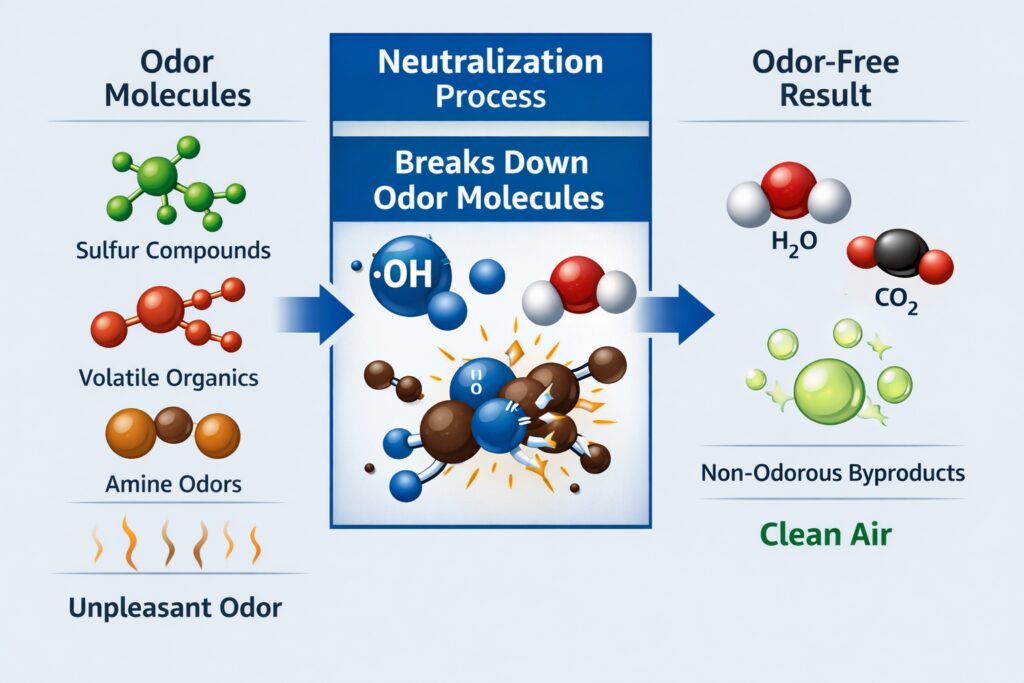
Real odor neutralization occurs when odor‑causing molecules are chemically altered or destroyed so they can no longer be detected by the human nose.
This can happen through:
• Oxidation reactions that break down odor molecules
• Encapsulation that permanently traps VOCs
• Source removal combined with air and surface treatment
• Controlled oxidation processes that reach porous materials
Importantly, neutralization must address both air and surfaces. Odor molecules embed themselves into drywall, insulation, subflooring, fabrics, and HVAC systems. Treating only the air is like wiping smoke off a mirror while the house is still burning.
Masking vs Neutralizing: The Critical Difference
Masking products rely on fragrance dominance. They add stronger smells to confuse or overpower your senses. Once the fragrance dissipates, the original odor returns.
Neutralization eliminates the smell’s ability to exist at all.
A simple test:
• Masking smells change over time
• Neutralized spaces smell like nothing
No “fresh,” no “clean linen,” no pine forest fantasy. Just neutral air.
Why Odors Are Harder to Remove in Maine Properties
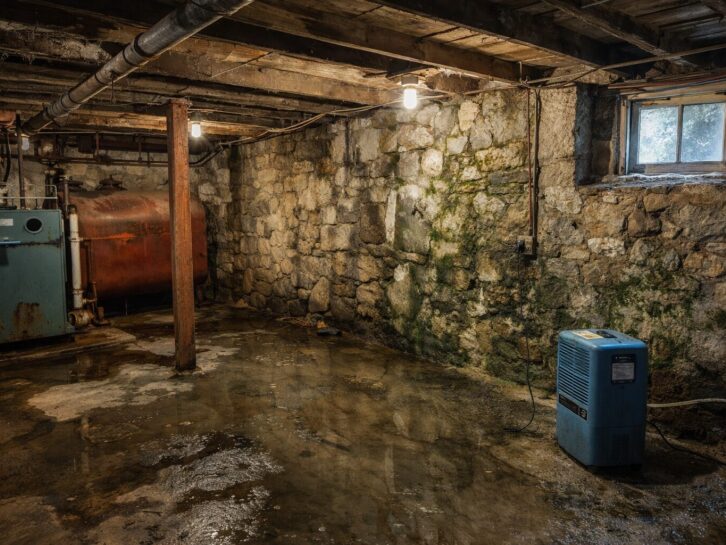
Maine’s climate adds unique challenges to odor remediation. Seasonal humidity swings, cold winters, older building stock, and coastal moisture create ideal conditions for odor absorption and re‑activation.
Porous materials in basements, camps, rental properties, and older homes act like odor sponges. Once contaminated, these materials can re‑emit odors every time temperature or humidity shifts.
That is why effective odor control in Maine requires region‑specific knowledge, not generic national solutions.
Also Read 👉🏼Chlorine Dioxide vs Ozone: Why Maine OdorPros Delivers True Professional Odor Removal
What Professional‑Grade Odor Neutralization Includes
At Maine Odor Pros, real neutralization follows a multi‑stage process:
- Source Identification
Odors are traced to their origin, not guessed at. This includes hidden cavities, HVAC pathways, and absorbed materials. - Source Removal or Isolation
Contaminated materials are removed or sealed when necessary. Neutralization cannot succeed if the source remains untouched. - Molecular Treatment
Professional oxidizing and neutralizing agents are applied using controlled methods that reach porous surfaces without causing damage. - Air Scrubbing & Exchange
High‑efficiency filtration removes remaining airborne compounds. - Post‑Treatment Verification
Spaces are evaluated after equilibrium returns, not immediately after treatment when results can be misleading.
This is a scientific process, not a scented guessing game.
Red Flags That an Odor Service Is Just Masking
Be cautious if a service:
• Relies heavily on fragrances or “fresh scents”
• Promises instant results without inspection
• Cannot explain their process in plain language
• Avoids discussing source removal
• Guarantees results without follow‑up evaluation
Real professionals welcome questions. Chemistry leaves a paper trail.
How Long Real Odor Neutralization Should Last
When done correctly, neutralization is permanent for the treated source. Odors do not “come back” unless:
• A new contamination occurs
• Hidden sources were inaccessible
• Structural materials continue to off‑gas untreated compounds
A properly neutralized environment remains stable across seasonal changes.
Why DIY Odor Products Rarely Work Long‑Term
Consumer odor products are designed for convenience, not chemistry. They lack penetration power, dwell time, and concentration needed to treat embedded VOCs.
This is why repeated DIY treatments often make odors worse. Layering fragrances over contamination increases chemical complexity without resolving the root cause.
Choosing an Odor Professional You Can Trust
A legitimate odor neutralization specialist should:
• Explain the science behind their methods
• Inspect before quoting
• Tailor treatment to odor type
• Address materials, not just air
• Stand behind their results
Maine Odor Pros operates with one goal: eliminate odors so thoroughly that nothing is left to notice.
Final Thought: Silence Is the Goal
The absence of smell is the only honest success metric.
If a space smells like anything after treatment, the job is not finished. Real odor neutralization leaves behind no scent, no reminder, and no return visits for the same problem.
That is what real neutralization looks like.
Also Read 👉🏼Removal of Carpet Stains & Odors Without Powders or Sprays | Maine Odor Pros
People Also Ask
1. What is the difference between odor removal and odor masking?
Odor masking covers smells with fragrance, while odor removal chemically eliminates the odor‑causing molecules.
2. Can odors come back after professional treatment?
Not if the source is fully neutralized; recurring odors usually indicate untreated hidden contamination.
3. Are ozone machines safe for odor removal?
Ozone must be used carefully by professionals, as improper use can be hazardous and ineffective.
4. How long does odor neutralization take?
Treatment time varies by odor type and severity, but results should be evaluated after normal air conditions return.
5. Do air fresheners remove odors?
No. They temporarily overpower smells without addressing the source.
6. Can pet urine odors be permanently removed?
Yes, when contaminated materials are properly treated or removed.
7. Why do odors return after cleaning?
Because cleaning removes surface dirt, not embedded odor molecules.
8. Does humidity affect odors?
Yes. Moisture can reactivate trapped odor compounds.
9. Are natural remedies effective for odor control?
They may help with mild smells but cannot neutralize deep contamination.
10. What should a professional odor inspection include?
Source identification, material assessment, and a clear treatment plan.